How Did COVID Change College Admissions?
I keep hearing that COVID permanently changed the college admissions process, but I'm having trouble sorting out what actually stuck versus what was just a temporary adjustment. My student is starting to think seriously about applications and I want to make sure we're working with accurate, current information.Specifically, I'm confused about the testing situation. I thought most schools went test-optional and would stay that way, but now I'm seeing some schools require scores again. Can someone break down what COVID actually changed, what has since been reversed, and what we need to know heading into applications today?
8 hours ago
•
2 views
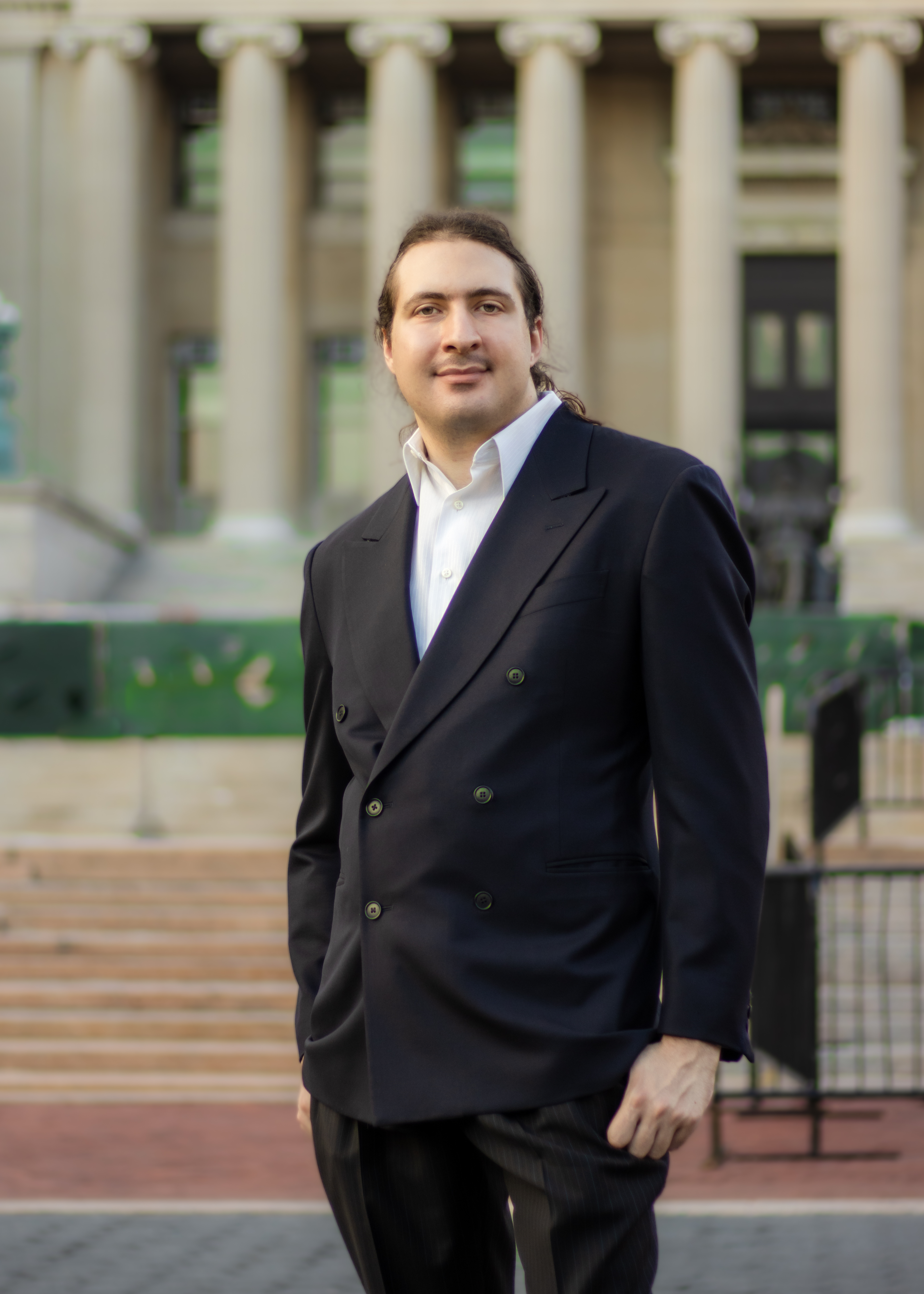
Daniel Berkowitz
• 8 hours ago
Advisor
COVID triggered one of the most consequential stress tests elite college admissions has ever seen, and five years later, the landscape looks genuinely different. Here is what actually changed, what stuck, and what it means for students applying today.
The most visible change was the collapse of standardized testing requirements. When the College Board canceled major SAT administrations in spring 2020, colleges adapted quickly. By the 2020-21 cycle, 89% of Common App member institutions had dropped testing requirements, compared to roughly one-third the year before. Among applicants, the share who submitted any test score dropped from 73% in 2019-20 to just 40% in 2020-21.
But test-optional was never meant to be permanent. What looked like an ideological shift was, for most schools, an emergency measure, and the retreat from it is already well underway. As of now, Harvard, MIT, Yale, Stanford, Dartmouth, Penn, Caltech, Cornell, Johns Hopkins, and Brown all require scores or have announced that they will. Princeton, Northwestern, Duke, Columbia, and a handful of others remain test-optional. UCLA and UC Berkeley are permanently test-free under UC system policy. A student applying to MIT, Harvard, Stanford, and Yale is essentially in a test-required world. Knowing which schools fall into which category, and preparing accordingly, is one of the highest-leverage moves a family can make.
COVID also caused application volumes to surge dramatically. When testing barriers dropped and "why not apply?" became a reasonable mindset, a large College Board consortium study found that applications to selective institutions grew by roughly 38% between fall 2020 and fall 2024. To put that in concrete terms: Harvard received 47,893 applications for the Class of 2029 and admitted roughly 2,003 students, around a 4% admit rate. When more qualified students flood the pool, getting in often becomes harder, not easier.
The way admissions offices evaluate applications also shifted in ways that are now permanent. When test scores became optional and extracurriculars were disrupted (no summer programs, no sports seasons, no community service hours), committees leaned harder on what remained. Academic rigor and GPA in context became even more central. Essays and recommendations gained weight, because when everyone's activity list looked thin, your story and how others described you mattered more. And contextual storytelling was formalized: the Common App replaced its pandemic-specific prompt with a permanent "challenges and circumstances" section, making the practice of explaining hardship a standard feature of elite applications rather than an emergency option. That infrastructure is not going away.
COVID also created practical enrollment uncertainty that changed how schools manage their waitlists. Many admitted students in 2020 deferred or chose not to enroll at all, forcing schools to build longer waitlists and more sophisticated yield modeling as buffers. Princeton's data for fall 2022 illustrates how volatile this can be: thousands of students were placed on the waitlist, and zero were ultimately admitted from it, because enrollment projections held. Families should understand that waitlist outcomes are not purely merit-based. They are enrollment management decisions made in real time, and they can swing dramatically year to year.
Finally, the post-2023 legal landscape compounds all of this. The Supreme Court's ruling ending race-conscious admissions means that first-generation status, socioeconomic background, and the authentic texture of a student's life story are now among the primary signals admissions offices can legally consider in pursuit of a diverse class. Essays have become even more consequential as a result. The rules have changed, and a student's strategy should reflect that.
The most visible change was the collapse of standardized testing requirements. When the College Board canceled major SAT administrations in spring 2020, colleges adapted quickly. By the 2020-21 cycle, 89% of Common App member institutions had dropped testing requirements, compared to roughly one-third the year before. Among applicants, the share who submitted any test score dropped from 73% in 2019-20 to just 40% in 2020-21.
But test-optional was never meant to be permanent. What looked like an ideological shift was, for most schools, an emergency measure, and the retreat from it is already well underway. As of now, Harvard, MIT, Yale, Stanford, Dartmouth, Penn, Caltech, Cornell, Johns Hopkins, and Brown all require scores or have announced that they will. Princeton, Northwestern, Duke, Columbia, and a handful of others remain test-optional. UCLA and UC Berkeley are permanently test-free under UC system policy. A student applying to MIT, Harvard, Stanford, and Yale is essentially in a test-required world. Knowing which schools fall into which category, and preparing accordingly, is one of the highest-leverage moves a family can make.
COVID also caused application volumes to surge dramatically. When testing barriers dropped and "why not apply?" became a reasonable mindset, a large College Board consortium study found that applications to selective institutions grew by roughly 38% between fall 2020 and fall 2024. To put that in concrete terms: Harvard received 47,893 applications for the Class of 2029 and admitted roughly 2,003 students, around a 4% admit rate. When more qualified students flood the pool, getting in often becomes harder, not easier.
The way admissions offices evaluate applications also shifted in ways that are now permanent. When test scores became optional and extracurriculars were disrupted (no summer programs, no sports seasons, no community service hours), committees leaned harder on what remained. Academic rigor and GPA in context became even more central. Essays and recommendations gained weight, because when everyone's activity list looked thin, your story and how others described you mattered more. And contextual storytelling was formalized: the Common App replaced its pandemic-specific prompt with a permanent "challenges and circumstances" section, making the practice of explaining hardship a standard feature of elite applications rather than an emergency option. That infrastructure is not going away.
COVID also created practical enrollment uncertainty that changed how schools manage their waitlists. Many admitted students in 2020 deferred or chose not to enroll at all, forcing schools to build longer waitlists and more sophisticated yield modeling as buffers. Princeton's data for fall 2022 illustrates how volatile this can be: thousands of students were placed on the waitlist, and zero were ultimately admitted from it, because enrollment projections held. Families should understand that waitlist outcomes are not purely merit-based. They are enrollment management decisions made in real time, and they can swing dramatically year to year.
Finally, the post-2023 legal landscape compounds all of this. The Supreme Court's ruling ending race-conscious admissions means that first-generation status, socioeconomic background, and the authentic texture of a student's life story are now among the primary signals admissions offices can legally consider in pursuit of a diverse class. Essays have become even more consequential as a result. The rules have changed, and a student's strategy should reflect that.
Comments & Questions (0)
No comments yet. Be the first to ask a question or share your thoughts!
Start the conversation
Have a follow-up question or want to share your experience? Leave a comment below.
Related Questions
Students also ask…
Daniel Berkowitz
New York City
Yale University - PhD in Theoretical Physics | NYU - BS in Physics
Experience
9 years
Rating
5.0 (274 reviews)